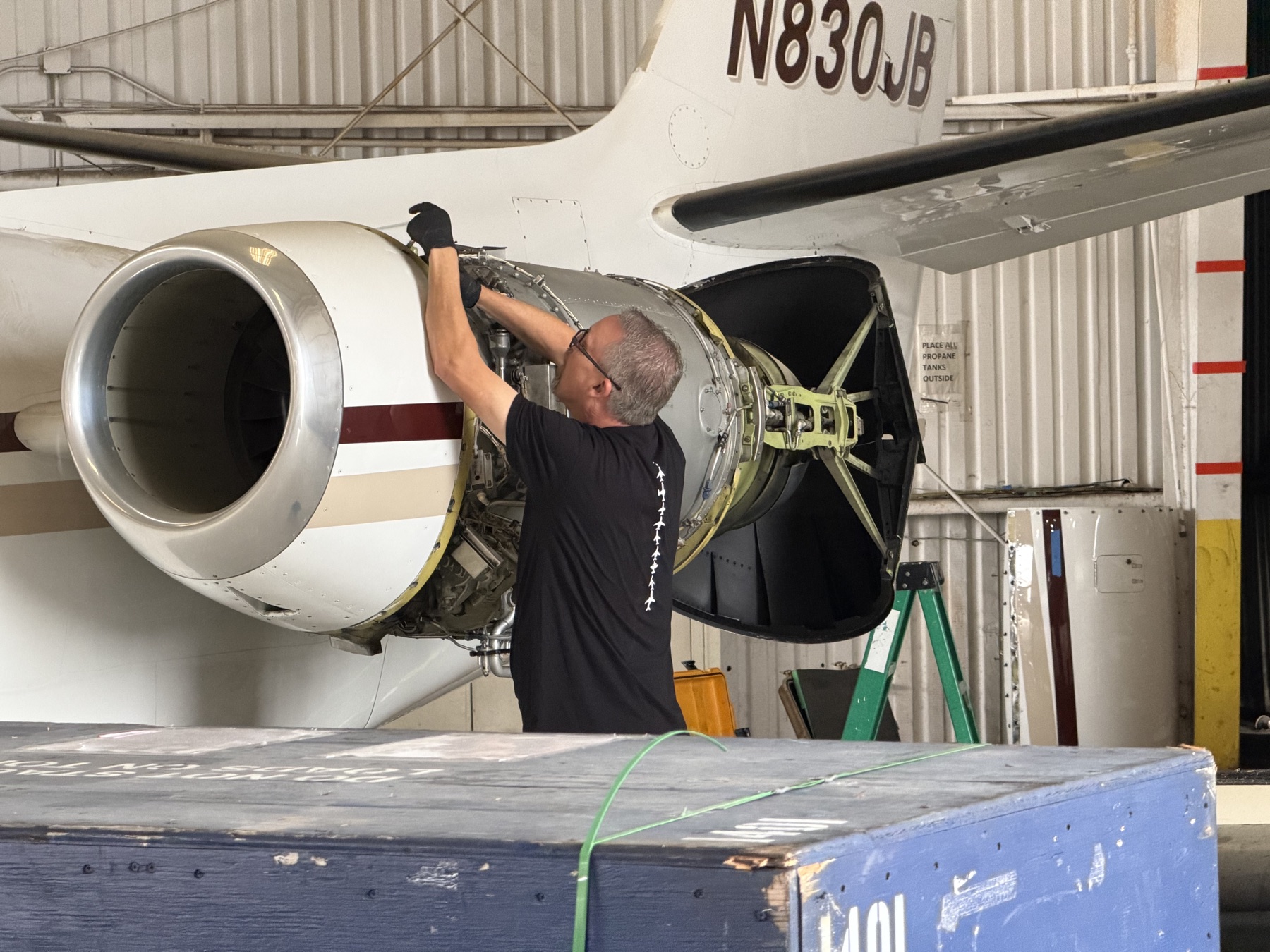
The unglamorous part of fleet ownership. Phase inspections, oil samples, squawk tracking, hot-section deltas, LLP cycle counts, IA sign-offs, vendor relationships at KFXE and across South Florida.
Owners get the reports. Lenders get the data. Pilots get an airplane that's ready to go.
What's included
- Phase inspection coordination
- AOG response coordination
- LLP and hot-section tracking
- Owner / lender reporting
Frequently asked
Common questions.
What does maintenance coordination cover that an MRO does not?
An MRO performs the work. Maintenance coordination owns the program around the work: scheduling against utilization, vendor selection, squawk triage, parts pre-positioning, AOG response, owner and lender reporting, and the calendar that keeps inspections from sneaking up on a flight that is already booked.
How does AOG response work when the airplane is away from base?
We get the airplane on a vendor list immediately, coordinate parts and a traveling tech if needed, and keep the owner informed against an actual return-to-service estimate rather than a rolling guess. South Florida and Bahamas routings are the common scenarios; we have done both.
What is a hot-section inspection and how often is it required?
On turboprops and turbine engines, the hot section (combustor, turbine wheels, nozzles) is inspected at a manufacturer-defined interval, typically a fraction of the time-between-overhaul. Tracking the delta between current cycles and the next hot section is part of what we do on every managed turbine aircraft.
What are LLPs and why do they need tracking?
Life-limited parts are turbine engine components (discs, shafts, certain rotating assemblies) with a hard cycle limit set by the manufacturer. Once a cycle limit is reached the part is removed from service regardless of condition. Cycle-accurate LLP tracking is the difference between a planned removal and an unplanned grounding.
Do you do the maintenance work in-house?
No. We coordinate maintenance with qualified shops; we do not hold our own repair station certificate. The advantage to the owner is that vendor selection is driven by what the aircraft needs, not by what we can bill internally.
What does an owner actually receive on a recurring basis?
A monthly report against the operating agreement: hours flown, squawks opened and closed, inspections due in the next 60 and 90 days, expenses against budget, and any items needing owner attention. For aircraft under finance, the same data flows to the lender in their preferred format.
Can you take over an aircraft mid-cycle from another management company?
Yes, and we have done it. The transition usually takes two to four weeks to rebuild the maintenance record, reconcile open squawks, transfer insurance touchpoints, and onboard the operating pilot. We do not require an owner to be unhappy with their current provider to have the conversation.
What problem are you trying to solve?
Each engagement is scoped per client. Email and we'll respond.