Your first step
in your aviation
journey.
A flight school inside a working aviation house.
The training line shares a roof with the maintenance shop that turns the wrenches, the consulting practice that scopes operations for owners, and the technology team that writes the curriculum software. Students learn to fly on an airplane the house owns, on a ramp the house works. The footing matters.
One airframe. Trained deep.
Every student trains on the Cirrus SR20. The same checklist flow from lesson one through the checkride. No swapping from a 172 to an Arrow to a Cirrus mid-course.
Part 61, by design.
Part 61 gives the syllabus room to breathe and lets the instructor tailor the lesson plan to the student. The pace is honest, not assembly-line.
The instructor stays.
We pride ourselves in paying 100% of the rate to our CFIs. The instructor who starts a student through Private finishes them. No rotating CFI carousel. Continuity from first solo to checkride.
South Florida airspace, from the start.
Bravo and Charlie shelves stack to the south of KFXE. Approach controllers run the busiest Class B sector in Florida. Students who train here come out fluent on the radio.
Seven 5-star reviews from students after their checkride.
The Pilot Port at KFXE.
Fort Lauderdale Executive Airport (KFXE)6000 NW 21st Avenue
Fort Lauderdale, FL 33309
The arc of training, on one panel.
Most flight schools count hours. We track competencies. A Private student is not 40 hours of logbook; they are a pilot who can plan a flight, fly it, and put it back on the ramp without help. The panel on the right is the public version of how the line measures progress, kept visible from first lesson to last.
Scroll to read · Panel stays
The Cirrus SR20.
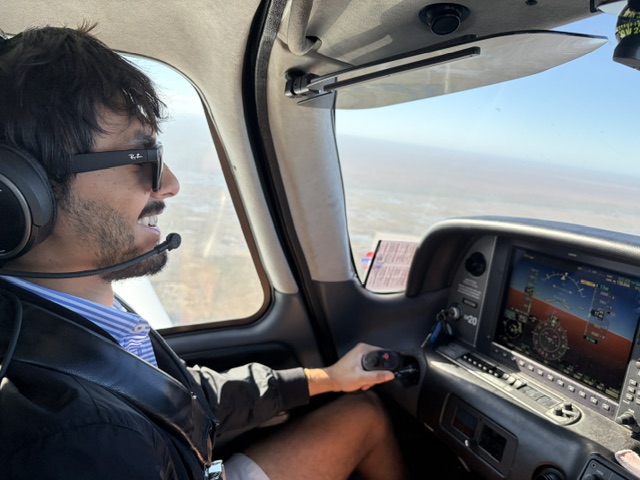
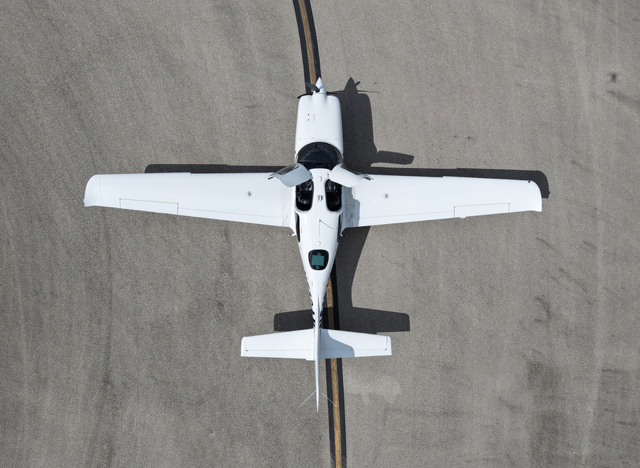
The airframe. A Cirrus SR20 with the Garmin Perspective+ glass panel and the airframe parachute system. The same airplane every student flies, from the discovery flight to the checkride and beyond. Block pricing is quoted on request.
The maintenance. The training line sits next door to the maintenance practice that keeps it flying. When a squawk surfaces, it is fixed in-house, on the ramp the student walks every morning. Continuity of care for an airframe is rare at this size of school. We chose to build it.
The ramp. Fort Lauderdale Executive (KFXE) is the South Florida airport with the best mix of dense Bravo airspace, Approach-controlled IFR practice routes, four-runway choice within fifteen flying minutes, and quiet enough early mornings to do real pattern work. We base here on purpose.
The platform. Every student is enrolled in AeroTech, the curriculum software the house built for the way Part 61 and Part 141 schools actually run. Lesson plans, endorsements, progress to standards, and the logbook handshake all live on one surface. The instructor opens the same screen the student does. Read about AeroTech →
From first lesson
to flight instructor.
Five tracks. One airframe. One instructor through each course. Each track has its own page, with the syllabus, hour expectations, and what the FAA wants out of the checkride.
Private Pilot · ASEL
The first license. From discovery flight through the checkride at a Designated Examiner. South Florida airspace from lesson one.
Instrument Rating
The rating that turns a fair-weather pilot into a serious one. We fly real approaches into real airports in the same air the airlines work.
Commercial · CFI · CFII
The professional track. Build to the commercial certificate, then earn the right to teach. A path the house can route into Pipeline if a student is aiming at a right-seat job.
Cirrus Transition
For owner-pilots stepping up to an SR20 or SR22. Built around the Cirrus syllabus, taught by an instructor who knows the airframe cold.
Flight training at KFXE, answered straight.
If the question you have is not below, write a sentence to fly@thepilotport.com. A real instructor will write back.
How is The Pilot Port different from other Florida flight schools?
The Pilot Port is a Part 61 flight school built around the Cirrus SR20 airframe and a deliberately low student-to-instructor ratio. Students keep the same instructor and the Cirrus SR20 from discovery flight through CFII, which is the opposite of the assembly-line model most Florida academies run. The bet is continuity over volume.
Is The Pilot Port a Part 61 or Part 141 flight school?
The Pilot Port is a Part 61 operation. We chose Part 61 deliberately because it lets us tailor the syllabus to each student rather than push everyone through the same FAA-approved lesson plan in the same order. The certificates issued are identical to those from a Part 141 school.
What aircraft do you train on and why the Cirrus SR20?
We train on a Cirrus SR20 with the Garmin Perspective+ avionics suite and the airframe parachute system (CAPS). The SR20 is the same family of airframe most modern owner-pilots fly into, so students leave already fluent in the cockpit they will keep using. Glass-from-day-one also makes the Instrument Rating significantly cleaner.
What is the difference between Part 61 and Part 141 in practice?
Part 141 schools follow a syllabus pre-approved by the FAA, in a fixed order, with formal stage checks. Part 61 schools have more flexibility on the order and content of lessons. Part 141 offers slightly lower hour minimums; Part 61 typically produces stronger stick-and-rudder habits because the instructor can adapt to the student. The checkride standard is the same either way.
Can I learn to fly in Fort Lauderdale year-round?
Yes. South Florida has roughly 250 flyable days per year. The two seasonal patterns to plan around are summer afternoon thunderstorms (May through October) and occasional winter cold fronts. Both are workable when training is scheduled for mornings and early afternoons, which is the cadence we default to at KFXE.
How long does it take to go from zero to CFI?
From a zero-hour start, the path through Private, Instrument, Commercial, and CFI typically takes 12 to 24 months of consistent training. Full-time pipeline students at The Pilot Port have completed the path in roughly 9 to 14 months. The variable is how many flying days per week the student can actually commit to.
What is the Pilot Port Pipeline versus open-enrollment certificates?
The Pilot Port Pipeline is our selective program for career-track candidates who plan to complete Private through CFII with us and may continue as instructors. Open-enrollment certificates are the same training delivered to students who are flying for themselves, not for a career. Pipeline candidates apply; open enrollment is by conversation.
Do you offer accelerated training tracks?
Yes, on a case-by-case basis. Full-time accelerated tracks compress Private into roughly three to six weeks and the Instrument Rating into six to eight weeks for a focused student with good weather. Accelerated training is bespoke at The Pilot Port; we will not promise it before scoping the candidate honestly.
Can transitioning pilots from another flight school train here?
Yes, and we see this often. Students who have started a certificate elsewhere bring their logbook, their existing endorsements, and their syllabus position; we evaluate where they are, fly with them once, and propose a continuation plan. The Cirrus SR20 currency phase is the most common adjustment.
Do you help with FAA medical certificates?
We do not issue medicals (only an FAA-designated Aviation Medical Examiner can), but we know the local AMEs near KFXE and can route students to them. We recommend students complete a Class 3 medical before first solo, and a Class 1 if the long-term goal is the airlines. We can also advise on common medical complications before the appointment.