Why The Pilot Port Trains in the Cirrus SR20 (And Why It Makes Better Pilots)
the airplane you learn in shapes the pilot you turn into, and for a long time there's been a gap between the cockpit students train in and the cockpit they hope to fly once they have the certificate in hand.
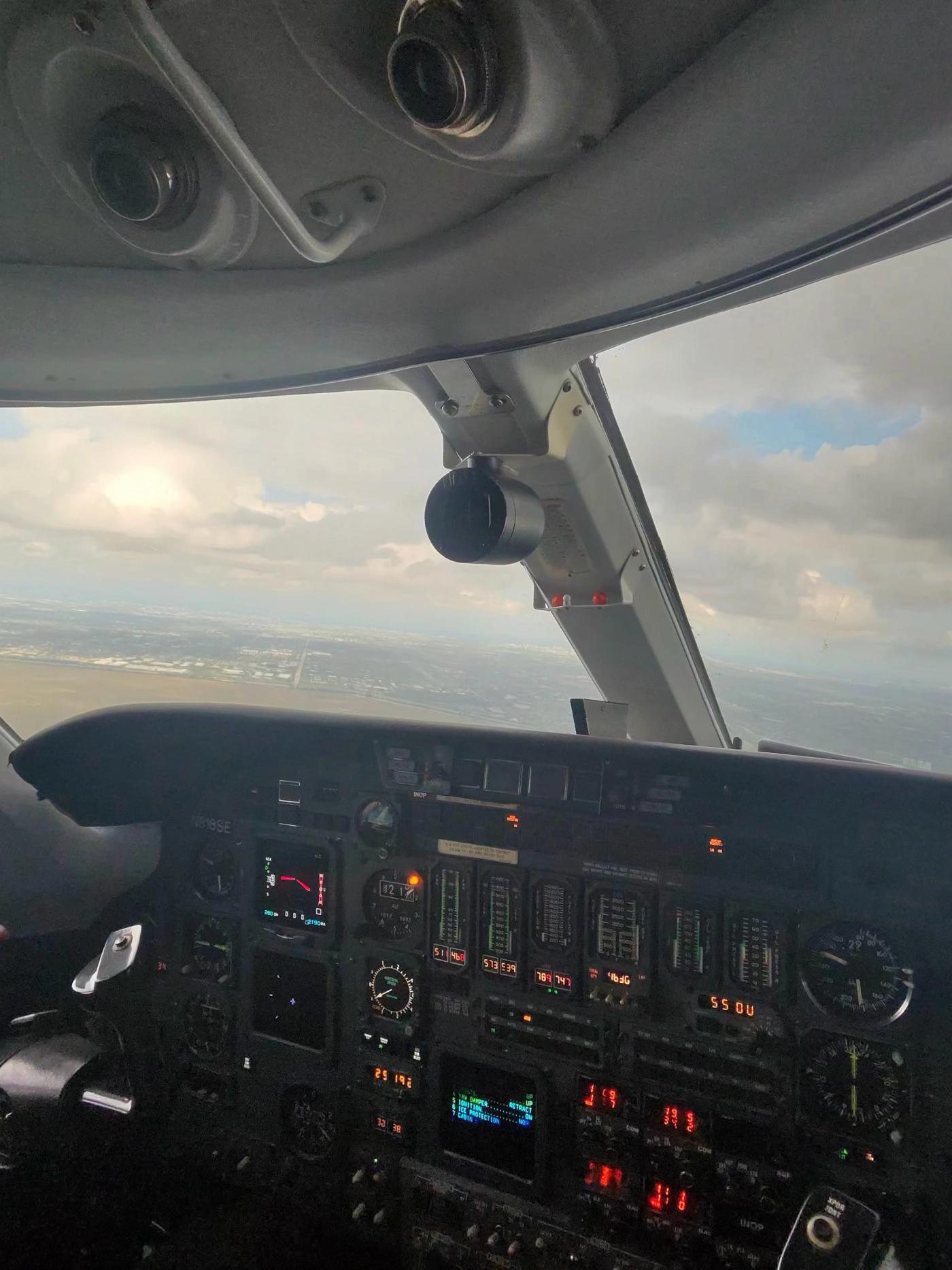
Walk onto most flight lines and you'll see the same two airplanes you'd have seen in 1975: the Cessna 172 and the Piper Cherokee. Nothing wrong with either one. They're forgiving, honest airplanes, and between them they've taught more people to fly than anything else ever built. We're not here to talk you out of them.
But the airplane you learn in shapes the pilot you turn into, and for a long time there's been a gap between the cockpit students train in and the cockpit they hope to fly once they have the certificate in hand. Closing that gap is why we put our students in the Cirrus SR20 at The Pilot Port, our Part 61 flight school in Fort Lauderdale, Florida.
Glass Cockpit Training from Day One
The SR20 isn't a sixties design with a newer radio bolted on. Cirrus started from a blank sheet in the 1990s: a composite airframe, a side-mounted control stick instead of the traditional center yoke where you'd expect a control wheel, and a glass cockpit that was built into the airplane rather than added later. Sit in one and the difference lands before the engine even turns. In place of the old "six-pack" of round analog gauges, you've got two big screens carrying your flight instruments, a moving map, engine data, traffic, weather, and the autopilot.
That's a wall of information and reading it well is a skill on its own. On the takeoff roll you care about a handful of things. In cruise you care about a different handful. The panel shows you all of it at once and leaves it to you to decide what matters, which is the same thing a sharp instrument pilot does without thinking about it. Our students start building that habit in their first few lessons instead of bolting it on years later.
Why Early Automation Training Matters
The automation cuts the same way. The autopilot, the GPS, the engine monitor: all useful, all easy to lean on too hard. So we teach the opposite of dependence. Know what the box is doing. Know when to switch it off. Be able to hand-fly the airplane down to a landing when the screens go dark, because one day one of them will.
How the Cirrus Parachute System Makes Better Pilots
Then there's the parachute. CAPS, the Cirrus Airframe Parachute System, will bring the whole airplane down under a canopy if a pilot ever pulls the handle. The hardware gets all the attention, but the part that makes better pilots is the thinking around it. Cirrus training treats the chute as a real option rather than a desperate last move, and that quietly changes how you fly. You stay in the habit of asking the useful questions: how much altitude do I have, what are my outs, where's the line past which I've run out of good ones. That's just sound decision-making, and it follows you into every airplane you'll ever touch.
Stick and Rudder First, Technology Second
None of this replaces stick and rudder. You'll sweat through the same stalls, steep turns, and crosswind landings as anyone learning in a Skyhawk, and you'll be expected to fly the airplane with your hands long before you let a computer touch it. The fundamentals don't get easier in a Cirrus. They just get taught right next to the systems work and the decision-making that modern flying asks for.
The SR20 also happens to be a real traveling airplane. It cruises around 140 to 155 knots, depending on altitude and configuration, which doesn't sound like much until you set it against the 110 or so you'd see in an older trainer. The faster you go, the farther your training reaches. Instead of grinding circles over the same practice area, our students fly to airports worth the trip, work with busy controllers, and juggle fuel, weather, and time the way every trip demands. From the Fort Lauderdale Executive airport, students fly cross-country to Palm Beach, the Keys, the Bahamas corridor, and into some of the busiest airspace on the East Coast.
The Cost of Training in a Cirrus (And What You Get For It)
Here's the honest tradeoff, since we'd rather say it than hide it: a Cirrus costs more to operate than a fifty-year-old trainer. What you get for the money is a pilot who walks away from the checkride already at home in the kind of airplane a lot of people are working toward in the first place. You don't finish training and then start over on glass, automation, and a faster airframe. You've been living in all three the whole way through.
That is the case for the Cirrus, the way we see it from the ramp at Fort Lauderdale Executive: the same fundamentals everyone has always learned, taught in the airplane you will want to fly once the training is behind you. If you want to see the SR20 up close and find out what training at The Pilot Port looks like, book a discovery flight or schedule a call with our team. We will walk you through the program, the aircraft, and what week one actually looks like.
Frequently Asked Questions About Cirrus Flight Training
Is the Cirrus SR20 a good airplane for flight training?
Yes. The Cirrus SR20 is a modern, composite, single-engine airplane with a glass cockpit (Garmin Perspective+ avionics), an integrated autopilot, and the Cirrus Airframe Parachute System (CAPS). It teaches students to manage the same avionics and automation they will encounter in more advanced aircraft, while still requiring the same foundational stick and rudder skills as any other trainer. The SR20 is certified under 14 CFR Part 23 and is used for primary, instrument, and commercial flight training at schools across the United States.
Does training in a Cirrus cost more than training in a Cessna 172?
Cirrus aircraft do carry a higher hourly operating cost than older trainers like the Cessna 172 or Piper Cherokee. The difference typically ranges from $30 to $60 per flight hour depending on the school and location. Over a full private pilot course of 50 to 65 hours, that translates to roughly $1,500 to $4,000 more in total cost. What you gain is proficiency in glass cockpit systems, automation management, and a faster, more capable airframe from day one, which eliminates the need (and cost) of a separate transition course later.
What is CAPS on a Cirrus aircraft?
CAPS stands for the Cirrus Airframe Parachute System. It is a whole-aircraft ballistic parachute integrated into the airframe behind the rear seats. If a pilot encounters an emergency beyond their ability to recover from (structural failure, midair collision, spatial disorientation, engine failure over terrain with no suitable landing site), pulling the CAPS handle deploys a parachute that lowers the entire aircraft to the ground. CAPS has saved over 100 lives since its introduction and is a standard feature on every Cirrus SR20 and SR22 produced. Cirrus training programs teach pilots when and how to use CAPS as part of the normal decision-making framework, not just as a last resort.
Can I get my private pilot license in a Cirrus SR20?
Yes. The Cirrus SR20 is fully approved for all stages of primary flight training, including the private pilot certificate. You will complete the same maneuvers, cross-country flights, and checkride requirements as any other PPL student. The difference is that you will also build proficiency in glass cockpit avionics, GPS navigation, autopilot management, and the Cirrus-specific procedures (including CAPS) as part of your core training rather than adding them later. The Pilot Port at Fort Lauderdale Executive Airport (KFXE) offers private pilot, instrument, commercial, and CFI training entirely in Cirrus aircraft.